Debattmøte om motebransjen og bærekraft / Debate on the fashion industry and sustainability
NORSK:
Mote- og tekstilindustrien skaper millioner av arbeidsplasser på globalt nivå. Samtidig betaler vi en høy pris i form av prekære arbeidsforhold, enorme miljøskader og forsøpling på verdensbasis. Hva skal til for å føre denne bransjen over i et mer bærekraftig spor?
ENGLISH:
The fashion and textile industry creates millions of jobs on a global scale. At the same time, we pay a high price in the form of precarious working conditions, severe environmental damage, and pollution worldwide. What will it take to steer this industry towards a more sustainable path?
NORSK:
Internasjonalt Seminar er et informasjons- og debattforum i Tromsø, som gjennom foredrag og paneldiskusjoner tar opp nord/sør-problematikk, miljø/klima, fattigdom/utvikling og krig/fred som sentrale tema.
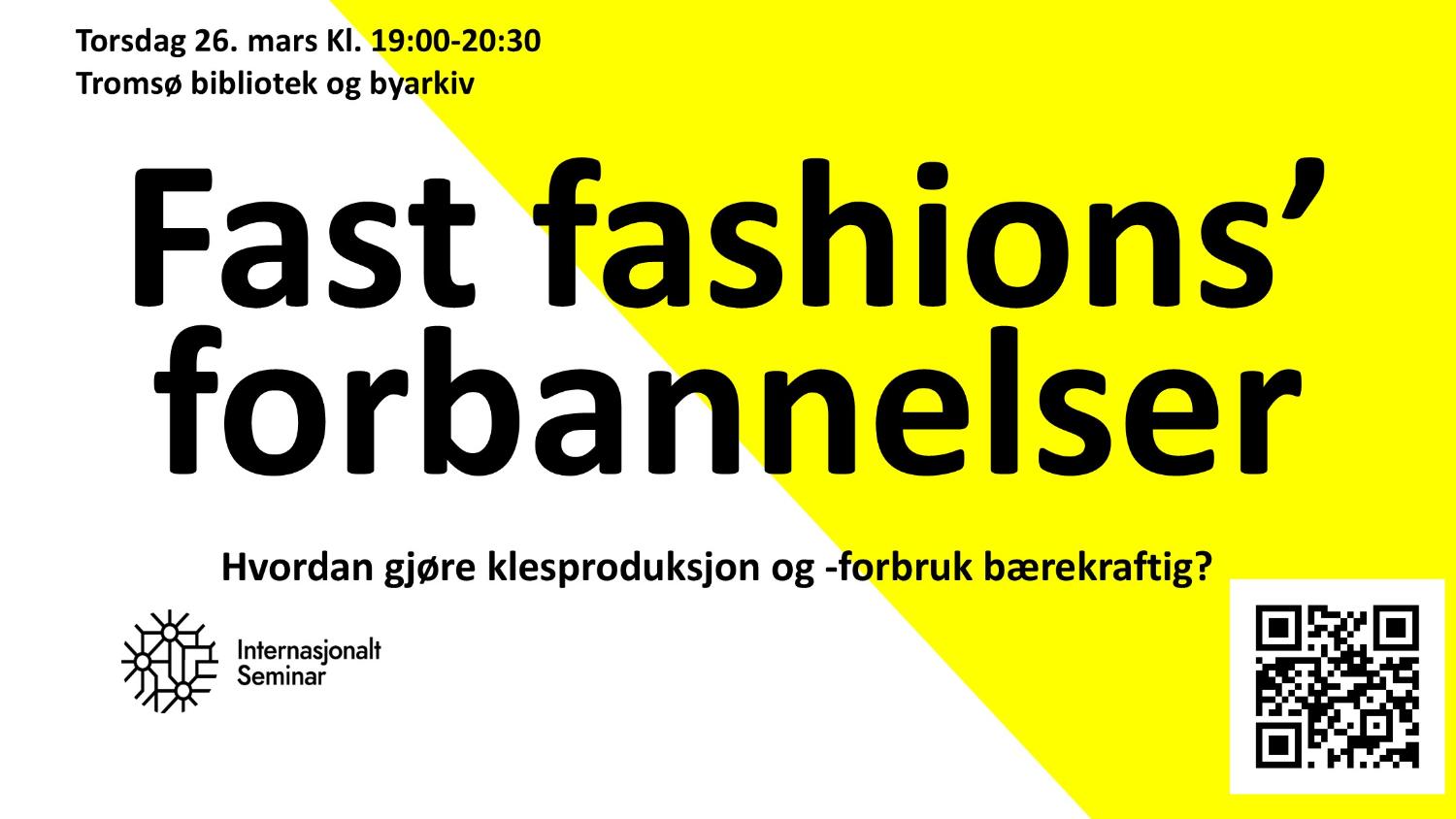
Torsdag 26. mars kl. 19:00-20:30, på Tromsø bibliotek og byarkiv, holdes det et debattmøte i Internasjonalt Seminar.
Tema for møtet:
Forbannelsen som hviler over Fast fashion – hvordan gjøre klesproduksjon og -forbruk bærekraftig?
Tekstilindustrien er en klimaversting som står for 8 % av de globale klimagassutslippene, har et høyt forbruk av vann og kjemikalier, påvirker biologisk mangfold negativt og forurenser jordsmonn, vannkilder og hav. Hele 20–35 % av mikroplasten i havene stammer fra plastbaserte plagg.
Moteindustrien, med sin ultra-fast-fashion-salgstilnærming, har bidratt til et enormt overforbruk og en massiv eksport av brukte klær som ender opp på gigantiske søppeldynger i fattige land. Samtidig arbeider mange tekstilarbeidere i det globale sør under elendige forhold: De får luselønn, risikerer straff dersom de organiserer seg, og mister jobben hvis de blir gravide. Fagforeninger undertrykkes, og næringslivet forsømmer sitt ansvar.
Til tross for disse skyggesidene ligger det et paradoks i denne næringen: Tekstilindustrien skaper også arbeidsplasser for millioner av mennesker, særlig kvinner, i hele verdikjeden – fra framstilling av råvarer til produksjon, transport, markedsføring og salg.
På dette seminaret vil vi:
INNLEDERE
Etter innledningene blir det spørsmål og åpen debatt.

Internasjonalt seminar har et program med 25-30 åpne møter i året.
Seminaret støttes av Tromsø kommune og koordineres av FN-sambandet Nord og Seksjon for internasjonalt samarbeid (SIS) ved UiT Norges arktiske universitet.
I tillegg støttes seminaret av Tromsøs humanitære organisasjoner, solidaritets- organisasjoner og studentorganisasjoner.
ENGLISH:
International Seminar is an information and debate forum in Tromsø, which addresses key topics such as North/South issues, environment/climate, poverty/development, and war/peace through lectures and panel discussions.
On Thursday, 26 March, from 19:00 to 20:30, a debate meeting will be held at Tromsø Library and City Archives as part of the International Seminar.
Topic for the meeting:
The Curse of Fast Fashion – How Can We Make Clothing Production and Consumption Sustainable?
The textile industry is a major climate offender, responsible for 8% of global greenhouse gas emissions. It has a high consumption of water and chemicals, negatively impacts biodiversity, and pollutes soil, water sources, and oceans. A staggering 20–35% of microplastics in the oceans originate from plastic-based garments.
The fashion industry, with its ultra-fast-fashion sales approach, has contributed to enormous overconsumption and a massive export of used clothing that ends up in gigantic landfills in poorer countries. At the same time, many textile workers in the Global South work under appalling conditions: they receive poverty wages, risk punishment if they organise, and lose their jobs if they become pregnant. Trade unions are suppressed, and businesses neglect their responsibilities.
Despite these dark sides, there is a paradox in this industry: the textile industry also creates jobs for millions of people, particularly women, across the entire value chain – from raw material production to manufacturing, transportation, marketing, and sales.
At this seminar, we will:
SPEAKERS
Following the presentations, there will be an open Q&A session and debate.
International Seminar organises 25–30 open meetings annually. The seminar is supported by Tromsø Municipality and coordinated by the United Nations Association of Norway (North) and the Section for International Cooperation (SIS) at UiT The Arctic University of Norway.
In addition, the seminar is supported by Tromsø's humanitarian organisations, solidarity organisations, and student organisations.