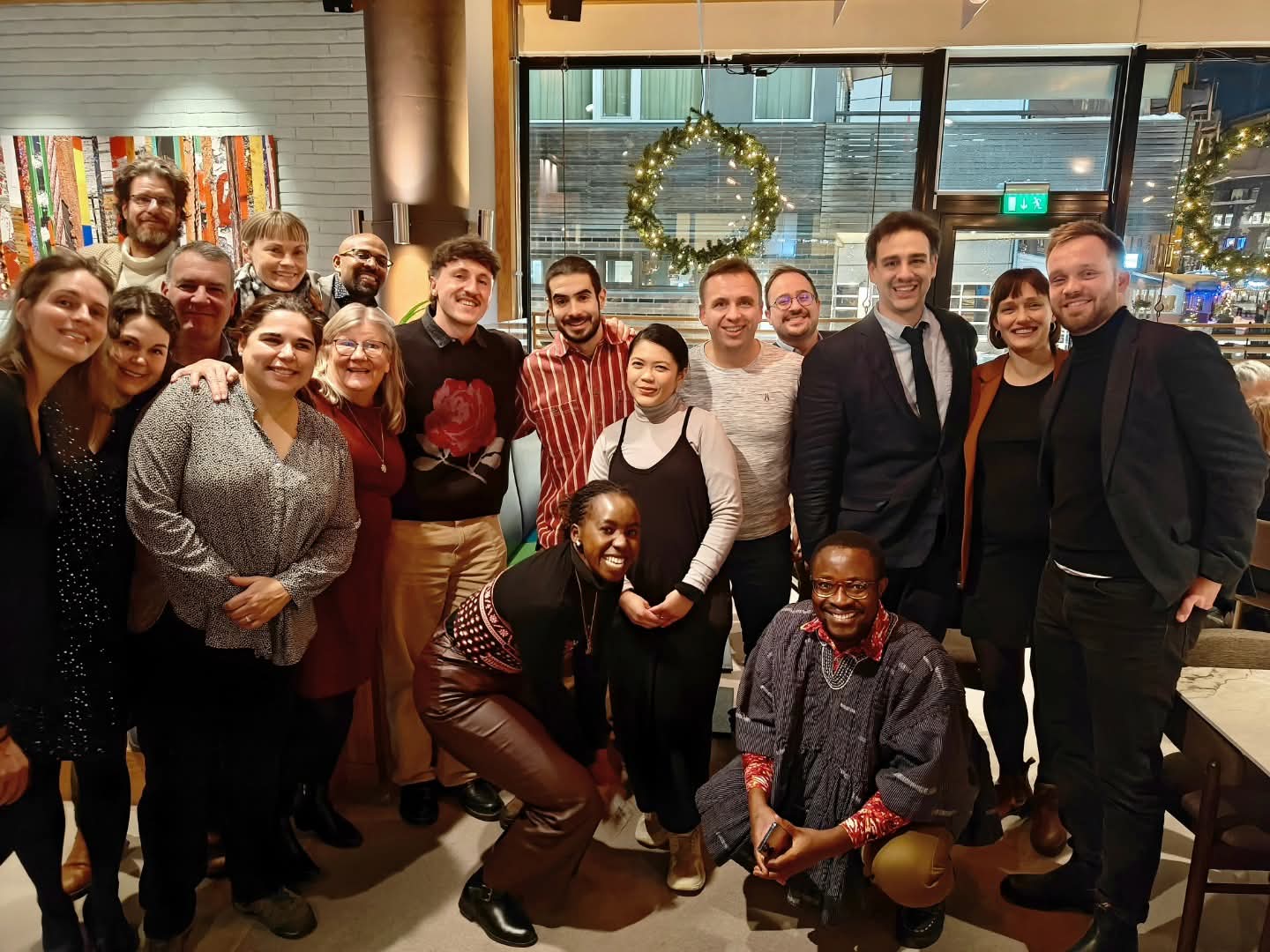
The Norwegian Centre for the Law of the Sea (formerly K.G. Jebsen Centre for the Law of the Sea) was established on 1 September 2013. This world leading research centre is located at the Faculty of Law, UiT the Arctic University of Norway, in Tromsø.
From 2021 until 2025, the NCLOS was a UiT Aurora Centre. The objective was to carry out a systematic assessment of the limits and possibilities of the law of the sea in achieving the global goals of ocean resilience and sustainability, and on this basis identify possible future legal responses. The research was organised in four main themes: Ocean Space; Sovereignty; Ocean Commons and Future Trajectories.
Visiting researchers
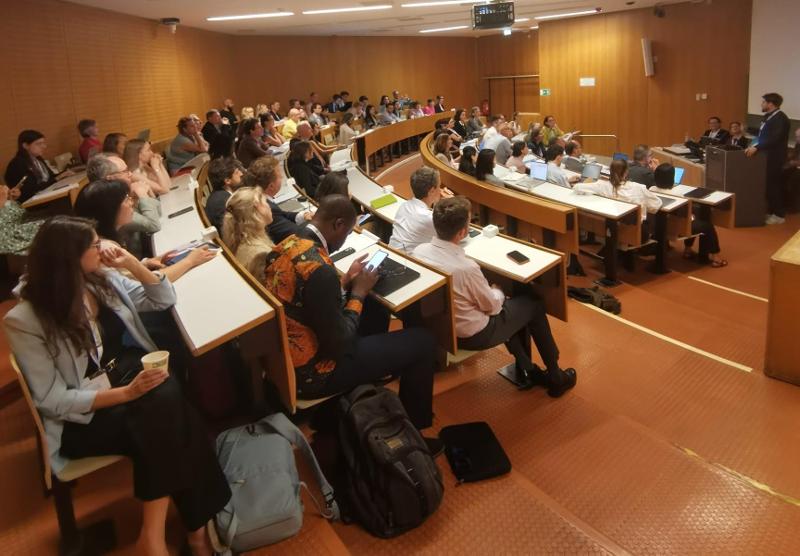
Visiting Researchers
Are you interested in visiting the Norwegian Centre for the Law of the Sea at UiT the Arctic University of Norway?
UiT Faculty of Law/UiT Norwegian Centre for the Law of the Sea hosts guest researchers who are either employed at a higher education institution or affiliated to a PhD-program at such an institution and wish to conduct research while visiting our Faculty. The Faculty does not provide paid fellowships.
Application Procedure: Use thisapplication formas only applications submitted through the form will be considered. The applications will be evaluated based on the scientific quality of previous research, references, and our hosting capacities during your preferred period of stay.
The series "Havets hemmeligheter", an informal and public presentation on a current issue. This time the topic was "Klimaendringer"
14 - 15 May
The K.G. Jebsen Centre for the Law of the Sea arranged a workshop between 14 and 15 of May 2019, entitled "Regulating Shipping in Russian Arctic Waters (SIRAW)". The program is available here.
The K.G. Jebsen Centre for the Law of the Sea arranged a workshop between 28 and 29 of January 2019, entitled "The Law of the Sea and Climate Change. Part of the Solution or representing Constraints". The program is available here.
21 January
The K.G. Jebsen Centre for the Law of the Sea arranged a workshop between 28 and 29 of January 2019, entitled "From research to practice - how to reduce plasic pollution in the Arctic". The program is available here.
The Symposium has been held every year since its launch in Akureyri, Iceland in September 2008. The Symposium brings together established scholars and post-doctoral and doctoral researchers from all across the world to share research in the fields of polar law and policy. In addition, leading experts are invited to give keynote lectures.
The University of Porto, the University of Lisbon and the UiT the Arctic University of Norway, through their Faculties of Law and the JCLOS, are pleased to announce that they will together organize the VIIth Colloquium of the International Association of the Law of the Sea entitled ‘GLOBAL CHALLENGES AND THE LAW OF THE SEA’, September 20-21, 2018.
The Colloquium brings together nationally and internationally renowned experts in the field of the Law of the Sea. In addition, leading experts are invited to give keynote lectures.
The University of Tromsø, Arctic University of Norway will be presented as well. The K.G. Jebsen Centre for the Law of the Sea is one of the associate sponsors. Vito De Lucia and Signe Veierud Busch, both from the K.G. Jebsen Centre for the Law of the Sea will be participating and presenting the following:
Vito De Lucia: The Ecosystem Approach to Marine Biodiversity Conservation in Areas Beyond National Jurisdiction
Signe Veierud Busch: Disputes concerning the Delineation of the Continental Shelf Beyond 200 M
Erik J. Molenaar: Key Issues of International Fisheries Law
7 - 8 JUNE
An Author's workshop on the book project "Indigenous Peoples in marine areas" will take place iat the University of Tromsø, The Arctic University of Norway the 25 - 26 April.
25 - 26 APRIL
An Author's workshop on the book project "The Development of the Law of the Sea by the International Judiciary" will take place at the Fridtjof Nansen Institute in Oslo the 25 - 26 April.
23 - 24 FEBRUARY
The Authors of the book project “Interaction of the law of the sea with other fields of international law” met for a two days workshop in Tromsø to discuss their individual drafts.
15 FEBRUARY
The series "Havets hemmeligheter", an informal and public presentation on a current issue. This time the topic was "Hvem har retten til Svalbards ressurser?".
24 JANUARY
A side event during the Arctic Frontiers, was the launch of the book Governance of Arctic Shipping: Balancing Rights and Interests of Arctic States and User States, published by Brill in September 2017. The side event's presentations focused on on potential cooperative mechanisms for balancing rights and interests of Arctic States and user States in light of experiences with Southeast Asian cooperative mechanisms.
2017
16 NOVEMBER
The series "Havets hemmeligheter", an informal and public presentation on a current issue. This time the topic was "Plast i havet: kan juss løse problemet?"
19 OCTOBER
The series "Havets hemmeligheter", an informal and public presentation on a current issue. This time the topic was "Bryter Norge Grunnloven ved å utvinne olje?".
OCTOBER
The planned conference is postponed to June 2018. The Centre will be co-organizing a conference on the topic of Central Arctic Ocean fisheries in Reykjavik, Iceland.
20 SEPTEMBER
The Centre arranged a seminar in Tromsø on the topic of "At-sea enforcement and naval warfare". Program.
Some of the presentations from the seminar are now available here: Presentations.
28 - 29 JUNE
Centre Postdoctor Fellow Claudia Cinelli will be organising a conference entitled: "Protecting the 'Commons' in the Arctic: The role of the EU". More information.
15 - 16 JUNE
The Jebsen Centre will be arranging a summer course for PhD students: "Methodology and legal science within the international Law of the sea". More information.
13-14 JUNE
The Jebsen Centre will be organising a workshop entitled “Natural Marine Resource Management in a Changing Climate.” More information.
13 JUNE
Vito de Lucia will be co-convening a workship entitled "Ocean Commons: Common Heritage, Marine Genetic Resources and Biodiversity Conservation in Areas beyond National Jurisdiction" organised by the Jebsen Centre and the Institute for International Legal Studies, National Research Council of Italy, in Rome. More information
22 - 27 JANUARY
The Jebsen Centre will be participating in the Arctic Frontiers 2017 conference being held in Tromsø, Norway. Many events will be taking place at The University of Tromsø. Centre members will be speaking on a number of panels and workshops across the six day conference. More information.
On 26 January, Centre Postdoctor Fellow Margherita Poto will organise an expert meeting titled “Good Governance and the Arctic” as part of the conference. More information.
2016
9 NOVEMBER:
K. G. Jebsen Centre for the Law of the Sea arranges a closing seminar for the interdisciplinary project "A-LEX: Regulating Arctic Shipping: Political, legal, tecnological and environmental Challenges". More information including the presentations from the day.
23 SEPTEMBER:
K. G. Jebsen Centre for the Law of the Sea arranges a symposium on "Innovating for change in global fisheries governance". Deadline for the submission of abstracts: 30 April 2016. More information.
21 - 22 SEPTEMBER:
K. G. Jebsen Centre for the Law of the Sea arranges a workshop on: "Access to compulsory binding dispute resolution under the Law of the Sea Convention (LOSC): a survey of the issues." More information.
26 - 28 MAY:
K. G. Jebsen Centre for the Law of the Sea arranges a conference on "Dispute Settlement in the Law of the Sea and Beyond" in Tromsø and Sommarøy" More information.
25 - 26 MAY:
K. G. Jebsen Centre for the Law of the Sea arranges a workshop on: "The Case Law on Maritime Boundary Delimitation - Consistency and Predictability or Inconsistency and Uncertainty?" More information.
15 APRIL:
K. G. Jebsen Centre for the Law of the Sea is together with Pluricourts proudly co-organizing a one day seminar on "Pushing boundaries: potential effects of international adjudiciation on treaty practice in the Russian and Norwegian context". More information.
23 MARCH:
JCLOS' postdoctoral fellow Claudia Cinelli (K.G. Jebsens Centre for the Law of the Sea, University of Tromsø and visitor at the European University Institute) participates in a seminar on "Governance of Areas Beyond National Jurisdiction at the International and Europeans Levels". More information.
7 - 8 MARCH:
K. G. Jebsen Centre for the Law of the Sea is co-organizing a Conference on "Law, Fragile Ecosystems, Indigenous Peoples and Natural Resources". The Conference venue is Sala Europa, Villa Schifanoia, Florence, Italy. More information.
24 - 29 JANUARY:
Arctic Frontiers 2016 was held at The University of Tromsø, Norway. This year's topic was Industry and Environment. The K. G. Jebsen Centre of the Law of the Sea had an active role at the conference, K.G. Jebsen Centre for the Law of the Sea at Arctic Frontiers.
Trial lecture and defence of thesis Kristoffer Svendsen. Kristoffer Svendsen will defend his thesis Friday 4 September. The trial lecture will be at 1015, the defence will be at 1215. Venue: Teorifagbygget, building 6, auditorium 3.
29 - 30 MAY:
The School of Law, University of Dundee, UK and The K.G. Jebsen Centre for the Law of the Sea, UiT, Tromsø are pleased to announce the program and the registration information for the conference: "The European Union and the Arctic", Dundee, Scotland.
8 - 9 MAY:
Call for abstracts: The K.G. Jebsen Centre for the Law of the Sea is hosting a workshop on Environmental Standards for Deep Seabed Mining in Tromsø, Norway.
Marsafenet, Conference on "Maritime safety and environmental protection in Europe. Multiple layers in regulation and compliance.", University of Porto.
K.G. Jebsen Centre for the Law of the Sea is a co-organizer of the conference. Draft programme.
Arctic Frontiers 2014 will be held at The University of Tromsø, Norway from Sunday 19 to Friday 24 January 2014. The theme of the conference is "Humans in the Arctic". The K. G. Jebsen Centre of the Law of the Sea will have an active role at the conference. www.arctic-frontiers.com/
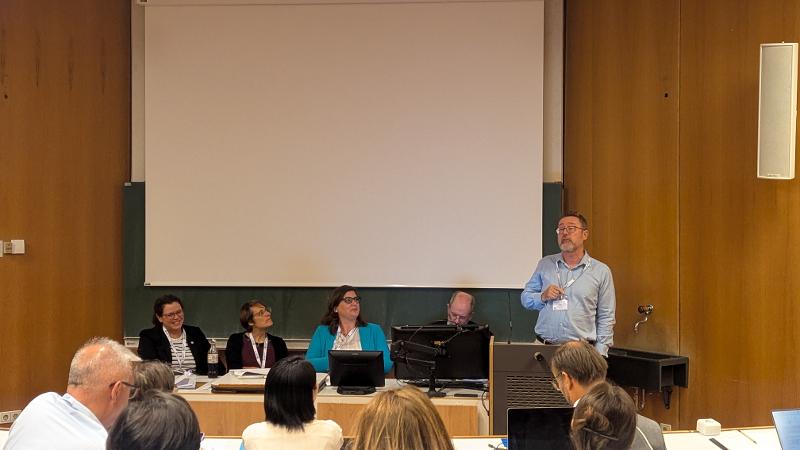
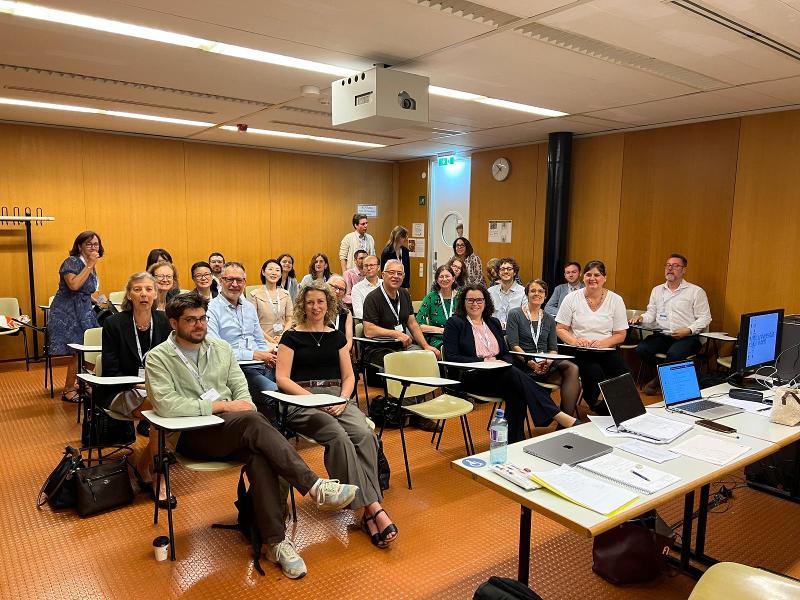
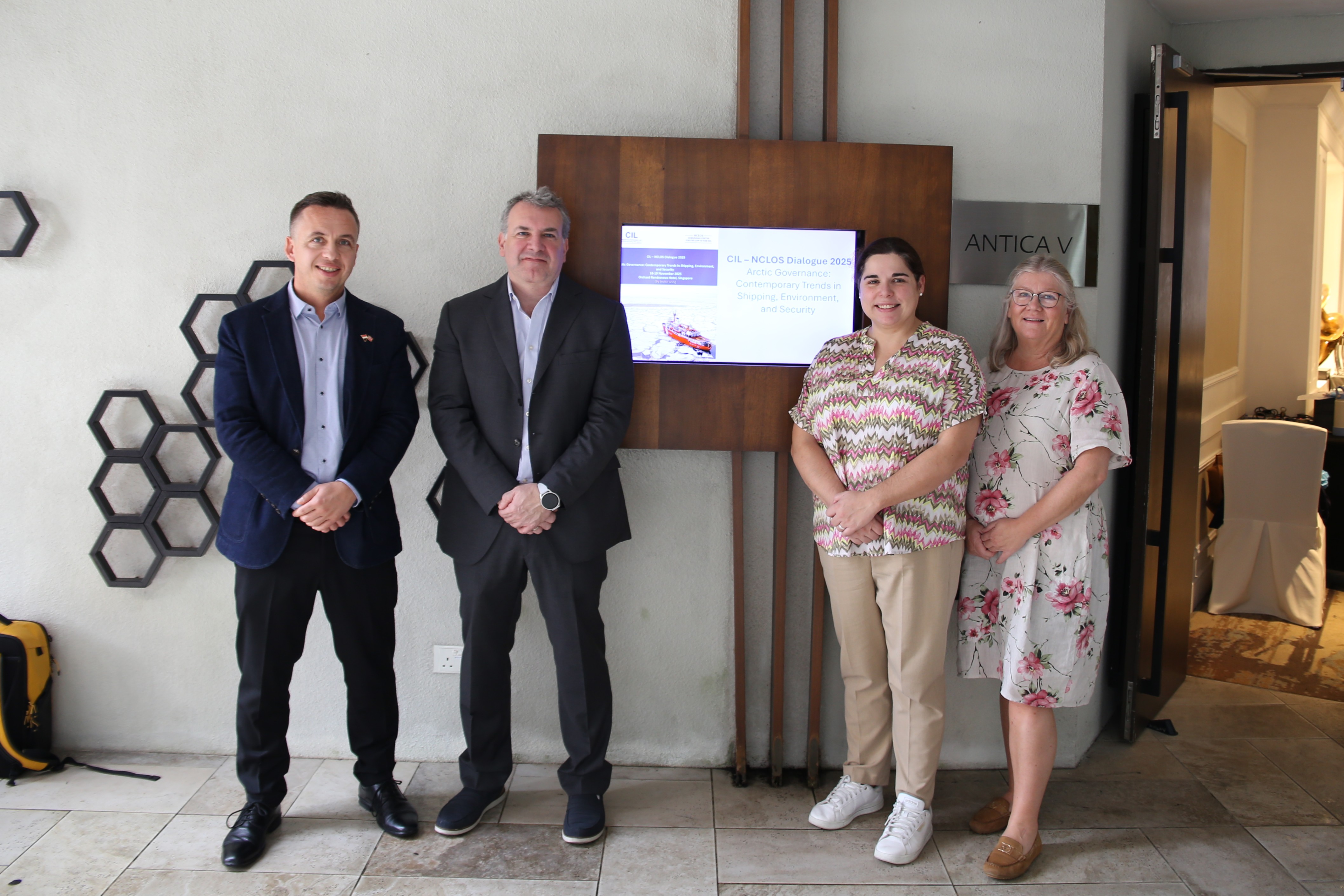
From 18–19 November, The Norwegian Centre for the Law of the Sea (NCLOS) co-organised the CIL–NCLOS Dialogue 2025 workshop, “Arctic Governance: Contemporary Trends in Shipping, Environment, and Security,” with Centre for International Law - Ocean Law & Policy (NUS).
Researchers from NCLOS, CIL, as well as representatives from The Norwegian Embassy in Singapore and Innovation Norway's Singapore office (Innovasjon Norge) at the workshop's venvue, Orchard Rendez-Vous Hotel. Photo: Charlotte Buksrud / UiT.
The opening address was delivered by First Secretary and Deputy Head of Mission Valentin Musangwa at the Norwegian Embassy in Singapore, who underscored the importance of international cooperation in strengthening Arctic governance and fostering collaborative ties.
From the left: Valentin Musangwa, and Vito De Lucia. Photo: Charlotte Buksrud / UiT.
Across the programme, discussions examined the evolving legal framework for navigation along the Northern Sea Route, its use for energy transport and potential container shipping, and ongoing efforts to enhance environmental protection, including measures addressing black carbon emissions and the heavy fuel oil ban.
Maria Das Neves. Photo: Charlotte Buksrud / UiT.
The workshop also explored the security and environmental implications of increasing maritime activity, such as prospective seabed mining, the deployment of autonomous maritime technologies, and emerging cyber vulnerabilities. The event concluded with a panel on the relevance of the BBNJ Agreement for Arctic governance.
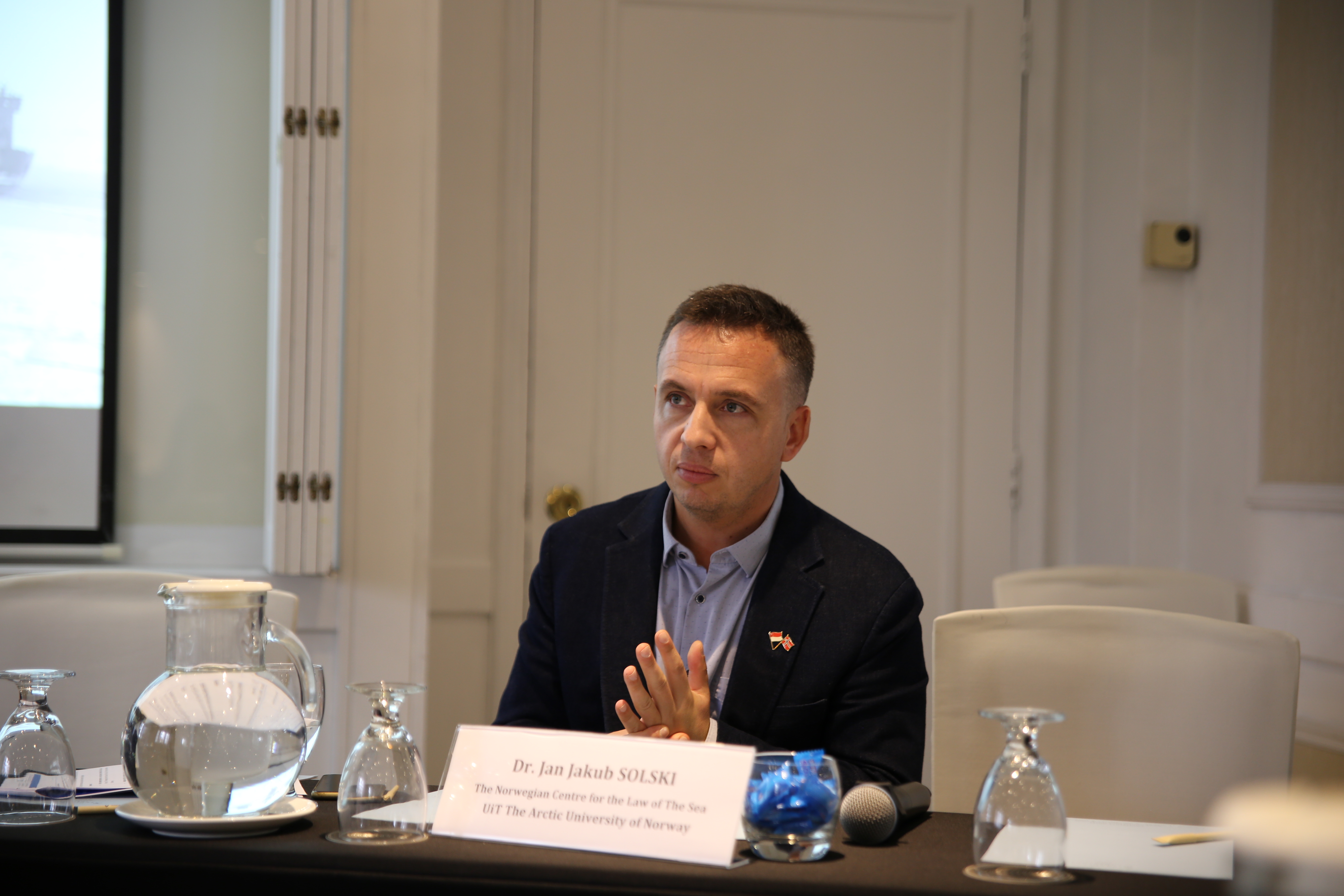
From the left: Jan Solski, Robert Beckman, and Vito De Lcuia. Photo: Charlotte Buksrud / UiT. Published: 21.11.2025
Link to this page
NCLOS Annual Conference 2025 in Tromsø
The Norwegian Centre for the Law of the Sea (NCLOS) successfully concluded its 2025 annual conference, held from 3–5 November in Tromsø. The event brought together leading experts, academics, and policymakers to examine the evolving role of implementing agreements under the United Nations Convention on the Law of the Sea (UNCLOS).
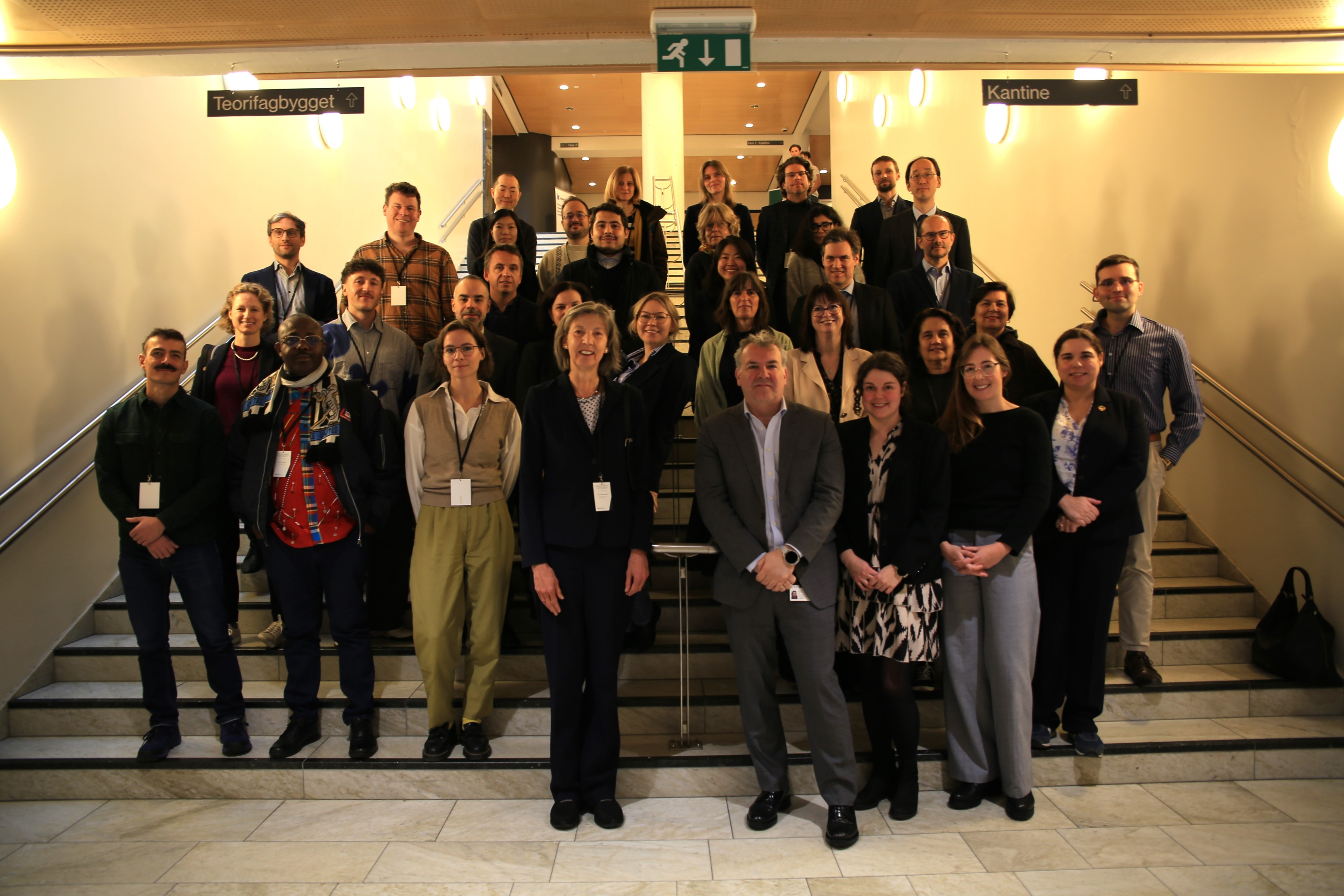
Day 1: Group photo of speakers and participants. First row, from the right: Maria Das Neves, Eva van der Marel and Ingrid Solstad Andreassen - NCLOS researchers and the organizers of this year's conference. In the middle, NCLOS Director Vito De Lucia, and to his left, former Director of the UN Division for Ocean Affairs and the Law of the Sea, Gabriele Goettsche-Wanli. Photo: Charlotte Buksrud / UiT.
This year’s conference, titled “The Role of Implementing Agreements,” featured five thematic panels and a high-level discussion. Participants addressed a range of topics including the 1995 UN Fish Stocks Agreement, the 1994 Agreement on the Implementation of Part XI of UNCLOS, the 2023 Agreement on Biodiversity Beyond National Jurisdiction (BBNJ), and broader cross-cutting issues in ocean governance.
Opening Keynote: Gabriele Goettsche-Wanli
The conference opened with a keynote address by Gabriele Goettsche-Wanli, former Director of the UN Division for Ocean Affairs and the Law of the Sea. Goettsche-Wanli discussed the interconnections among the three main UNCLOS implementing agreements: the 1994 Part XI Agreement, the 1995 Fish Stocks Agreement, and the 2023 BBNJ Treaty. She emphasized the importance of coordinated implementation to prevent fragmentation within the UNCLOS framework and highlighted the need for inclusive processes that support developing states through capacity-building initiatives.
Gabriele Goettsche-Wanli. Photo: Charlotte Buksrud / UiT.
Panels on Day 1
Three thematic panels followed the opening keynote. The first explored the UN Fish Stocks Agreement, emphasizing its ongoing relevance to sustainable fisheries and emerging challenges such as climate change. The second examined the Part XI Implementation Agreement, focusing on its influence on the governance of deep seabed mining and the global economic order. The third addressed the BBNJ Agreement, considering its potential to strengthen the overall UNCLOS framework and enhance international collaboration on marine biodiversity.
Second Day: Keynote by Ambassador Rena Lee
The second day began with a keynote speech by Ambassador Rena Lee, Singapore’s Ambassador for International Law and President of the Intergovernmental Conference on the BBNJ Agreement. Lee described the Agreement as a framework that “gives directions, not details,” emphasizing that while mechanisms are in place, further refinement will occur as implementation progresses. Noting that 75 states have ratified the BBNJ Agreement to date, she stressed the shared responsibility of Member States and non-state actors to ensure cooperation among international frameworks.
Singapore Ambassador Rena Lee. Foto: Charlotte Buksrud / UiT.
Panels on Day 2
Day two featured panels on area-based management tools and strategic environmental assessments under the BBNJ Agreement. Discussions addressed how these tools interact with existing management regimes and their potential implications for high seas governance and protection in the Arctic region. A subsequent panel examined cross-cutting issues, including lessons from previous implementing agreements, the role of science-policy interfaces, and the relationship between the BBNJ Agreement and the International Maritime Organization.
High-Level Panel and Closing
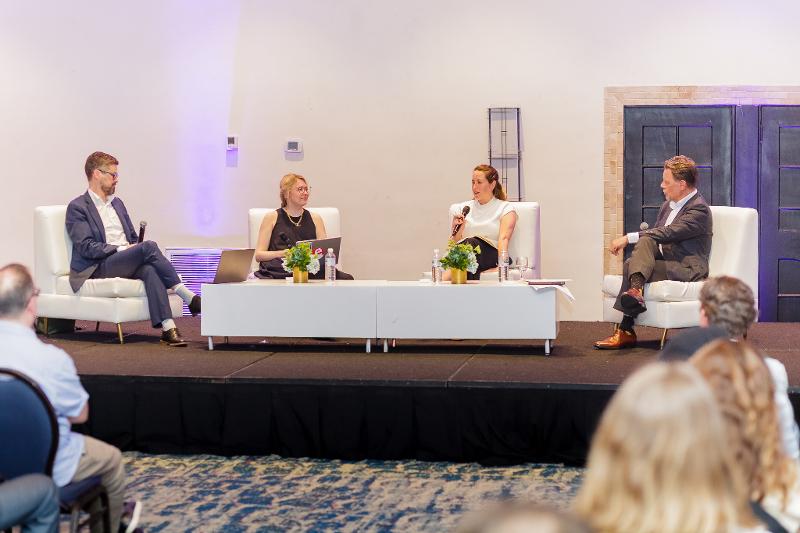
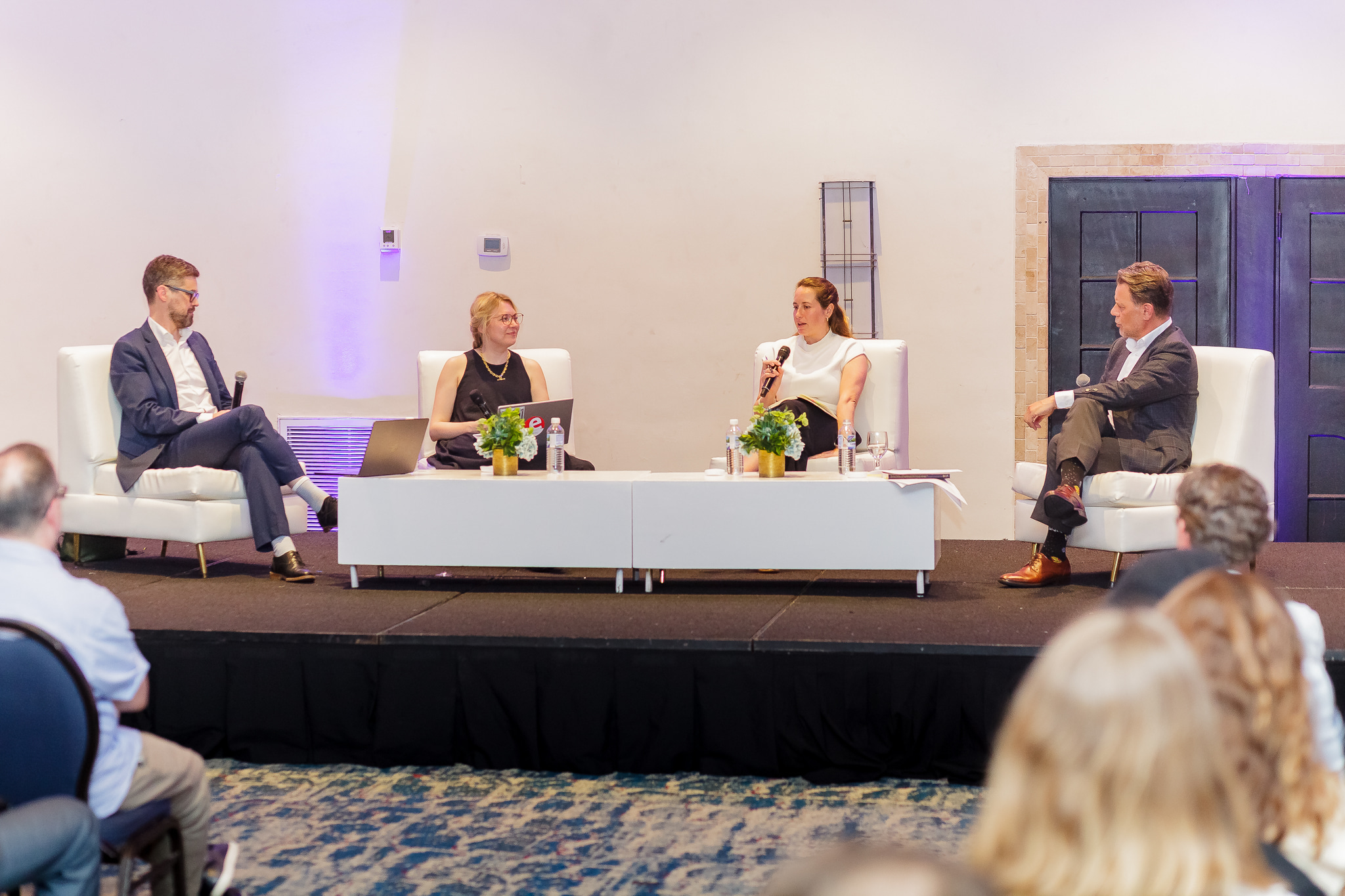
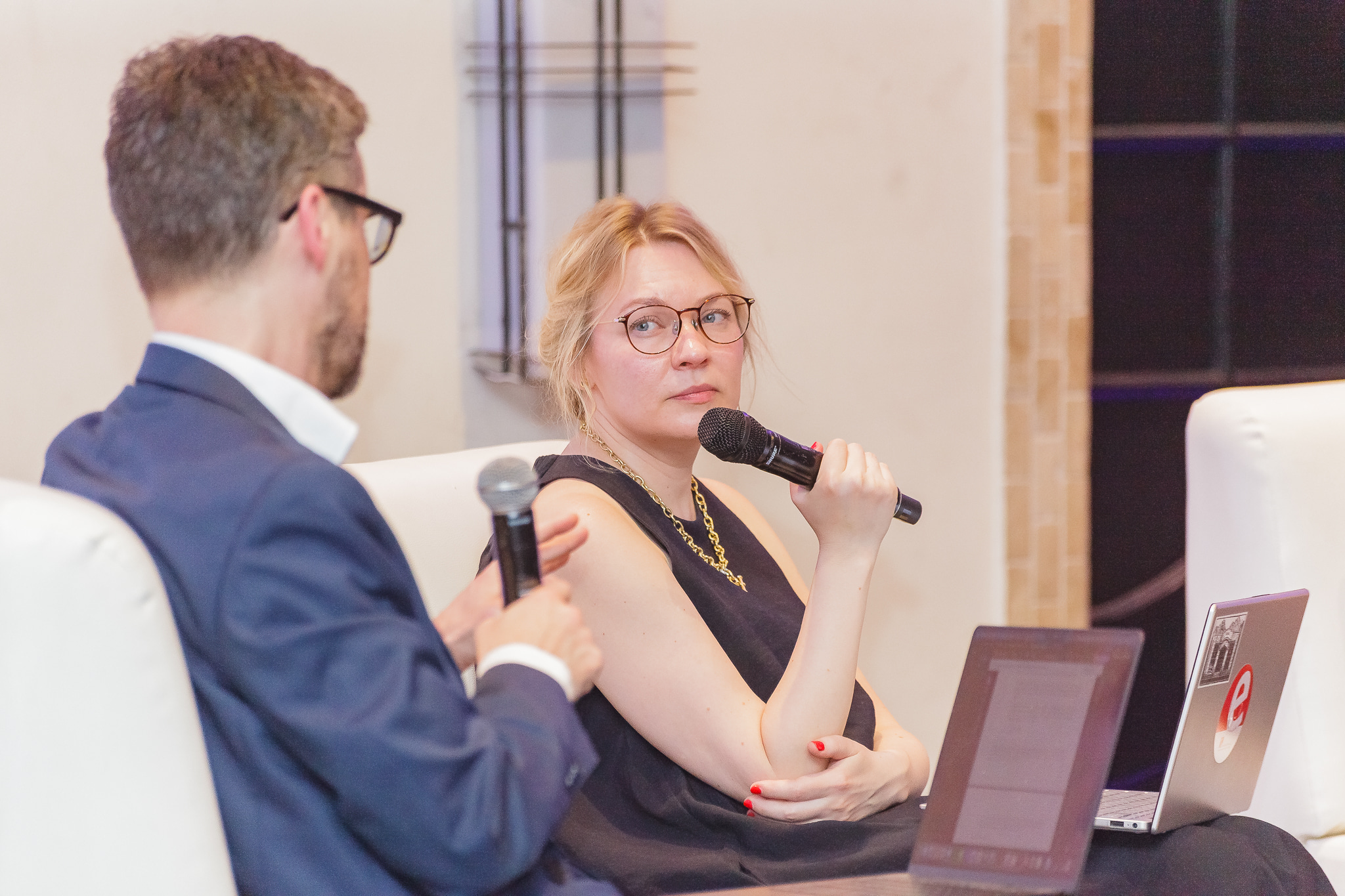
The conference concluded with a high-level panel featuring Gabriele Goettsche-Wanli, Rena Lee, Joanna Mossop, and Vito De Lucia. The speakers reflected on how implementing agreements continue to shape the development of international ocean governance and the ways in which the BBNJ Agreement could promote greater global cooperation.
High-Level Panel. From the left: Gabriele Goettsche-Wanli, Rena Lee, Joanna Mossop, Vito De Lucia, and Ellen Hey (moderator). Photo: Charlotte Buksrud / UiT.
Throughout the three-day event, participants highlighted both the opportunities and challenges involved in strengthening the Law of the Sea through effective implementation and collaboration.
As the days grow longer, we’re sending warm wishes from all of us at NCLOS when we are heading into winter.
The Centre has been full of energy and new projects during the sunny months. We hope you enjoy our latest newsletter were we share highlights from the spring and summer months.
In the early days of April The Estonian MFA&MoJ organised aLegal Conference on the Protection of Critical Underwater Infrastructure and Inter-State Discussionsthat was attended by state representatives, experts, and academics from ca. 30 countries. Dr. Alexander Lott contributed to the conference with a presentation on law-making jurisdiction over offshore infrastructure with the title “Prescriptive Jurisdiction over Underwater Infrastructure Protection”. The program continued the next day with interstate discussions in Tallinn.
While in Tallin Alexander also held a guest on maritime security law to the students of the international master's program at the Tallinn University.
On the NCLOS Research Lunch of 10th of April we had a presentation by Gor S., who is a Marie Skłodowska-Curie postdoctoral research fellow at the Law Faculty, Crime Control and Security Law Research Group. The presentation covered his postdoctoral project titled "Normative Order of the Radical Environmental Movement and the Enforcement of International Environmental Law.
Gor’s research project explores whether the radical environmental movement has evolved into a normative order of enforcement of international environmental law. It invokes some of the key propositions of the theory of legal pluralism and tests two corresponding hypotheses against the experience of seven transnational environmental organizations over a forty-year period, including Greenpeace, Sea Shepherd, and Eco Activists for Governance and Law Enforcement.
The presentation outlined the project's conceptual framework and highlighted some preliminary findings that show a significant practice of these organizations to be relevant to the enforcement of international environmental law.
Toward the end of April NCLOS organised the event “Ice, Technology and Ethics” in collaboration with Arctic Frontiers Open as part of the series “Secrets of the Ocean".
The event brought together experts to discuss legal, environmental, and ethical implications of sea ice geoengineering - an emerging technology that is being developed and experimented with to counteract effects of climate change.
A heartfelt thank you to all the speakers, Apostolos Tsiouvalas, Jenny Turton, Mario Acquarone, Malou Platou Johansen and Harald Steen for their thought-provoking contributions and to everyone who joined at Amtmandens in Tromsø for an engaging discussion.
From the 5th to the 7th of May research fellow Bastiaan Klerk presented at the IUCN’s World Environmental Law Congress in Rabat, Morocco, where he presented at the plenary panel on ‘IUCN at International Courts’. Here he shared reflections from his work as IUCN legal counsel in the lead-up to the ITLOS Advisory Opinion. Bastiaan also presented on the panel on ‘Integrating different objectives in Ocean Governance’, where he gave a presentation titled “Dynamic Area-Based Management Tools for a Changing Ocean: A Case Study”.
At the same time Dr. Alexander Lott were in Jakarta at the ‘Expert Discussion on Humanity in Naval Warfare’ event organized by the International Committee of the Red Cross, Global Initiative on international humanitarian law and Ministry of Foreign Affairs of Indonesia. During this event Alexander held two presentations titled “Protection of Critical Offshore Infrastructure: The Law of Naval Warfare Perspective” and “The Law of Blockade and Interaction with the Legal Regime of Straits”.
Moving toward the middle of May Norwegian Centre for the Law of the Sea had the privilege of hosting a joint seminar, in collaboration with the Environmental Humanities Research Group at UiT The Arctic University of Norway, titled “Settler Ecologies: The Conservation Regime in Palestine-Israel” with Professor Irus Braverman.
During the seminar, Professor Braverman shared insights from her book, "Settler Ecologies", which examines settler colonialism and ecological practices in the Palestine-Israel context. Drawing on years of ethnographic fieldwork, her book discloses how nature management—national parks, nature reserves, and the reintroduction of species—is being used as a strategy of dispossession in Palestine-Israel by the State of Israel to control and claim ownership over Palestinian territory, further advancing the Zionist settler colonial project.
June was an especially busy month for the members of NCLOS. In the beginning of June Postdoctoral Research Fellow Jessica Schechinger, Professor Richard Barnes and Associate Professor Youri van Logchem participated in the UNODC expert group meeting on effective maritime law enforcement in marine protected areas (MPAs) in areas beyond national jurisdiction (ABNJ) in Vienna, where they discussed the draft issue paper on this topic.
Right after this research fellows Bastiaan Klerk and Mana Tugend, took part in the One Ocean Science Congress in Nice as part of a learning expedition organized by the Institut français de Norvège. This inspiring initiative brought together researchers from a wide range of disciplines such as marine scientists, legal scholars, Indigenous knowledge holders, policymakers, and early-career researchers. Thus, creating a dynamic space for collaboration, dialogue, and the exchange of ideas on sustainable ocean governance.
During the same time Dr. Alexander Lott visited Bodø for the XXXVIII Nordic Military Legal Advisors’ Meeting organized by the Norwegian Ministry of Defence. There he delivered a presentation on “Maritime Law Enforcement in the context of Hybrid Warfare”
Also in the start of June, at this year’s Blått kompass Conference in Tromsø, Professor Vito De Lucia, addressed legal challenges emerging from a rapidly transforming Arctic. With the summer sea ice in the Arctic Ocean projected to disappear entirely by 2050, the region faces a surge in human activity, from shipping and tourism to industrial development.
Speaking at the session “What happens when the sea ice melts?”, organised by Senter for hav og Arktis and The Arctic Ocean 2050 research programme, Professor De Lucia highlighted the urgent need for robust, adaptable legal frameworks to respond to accelerating ecological change, shifting geopolitics, and new commercial pressures.
From the 9th to the 13th of June, the third United Nations Ocean Conference (UNOC3) was held in Nice, France, aiming to advance global efforts to protect and sustainably use the ocean and its resources, in support of Sustainable Development Goal 14 (SDG14).
As part of UiT – The Arctic University of Norway’s side event Arctic Future Pathfinders, a panel on the 10th of June featured Associate professors Maria Madalena das Neves and Eva R. van der Marel. The discussion focused on legal and governance challenges related to the marine Arctic: Maria addressed legal frameworks for deep-sea mining, highlighting environmental risks and implications for Arctic Indigenous rights. Eva examined plastic pollution, particularly from fishing gear, environmental challenges of increased shipping and tourism in the Arctic, and discussed the potential of a global plastics treaty.
UNOC3 concluded with the political declaration “Our ocean, our future: united for urgent action,” reaffirming high-level commitments to ocean sustainability. The event also marked progress on the BBNJ Agreement, with 19 countries depositing ratifications during that week.
The second yearly Future Arctic Law and Governance (FALG) workshop was held in Rome 10th of June, at the Tor Vergata University of Rome, one of the FALG project partners.
The FALG project strives to enhance global research collaboration to offer fresh insights into the challenges and opportunities for future Arctic ocean law and governance. The project addresses the combined pressures of climate change, melting icecaps, heightened human activity and geopolitical challenges impacting the marine Arctic and its ecosystems, as well as its legal institutions and governance frameworks and processes.
This year’s theme was biodiversity, and the workshop offered contributions from project partners, as well as other invited experts, and included an intervention by Ambassador Agostino Pinna, Special Envoy for Arctic, Italian Ministry of Foreign Affairs and ITLOS Judge Ida Caracciolo, University of Campania Luigi Vanvitelli.
The FALG partners who participated in the workshop were Fiammetta Borgia, Henry Jones, Timo Koivurova, Geri Hønneland, Beatriz Martinez Romera, Aldo Chircop, and Vito De Lucia and Irene Dahl from NCLOS.
Later in June Alexander Lott, Jessica Schechinger, and Youri van Logchem attended 'The hybrid battlefield of fibre optic communion cables' conference that was organised by Universitetet i Bergen (UiB). Alexander presented on 'Enforcement of international and domestic law to protect cables in the Baltic Sea' and Youri presented on 'The protection of submarine telecommunication cables under international law'.
Summer is usually slow, but on the 23rd of July Research fellow Sofie Elise Quist and Postdoctoral Research Fellow Jessica Schechinger organized an opportunity for colleagues to watch the ICJ deliver its Advisory Opinion (Obligations of States in respect of Climate Change (Request for Advisory Opinion)). A couple of NCLOS colleagues watched together with some snacks and our ICJ Bingo sheets.
Later in July Dr. Alexander Lott held two presentations. He participated at The International Law of the Sea Summer Academy organized by Kadir Has University in Istanbul where he held presentations on “Straits Used for International Navigation” and “Hybrid Threats and the Law of the Sea”.
Throughout most of July, from the 7th to the 27th, Associate Professor Endalew Lijalem Enyew visited the Institute of Marine and Environmental Law (MELAW), Schulich School of Law, Dalhousie University, Canada, as a visiting researcher. There he participated in the MELAW–NCLOS workshop on “Ecosystem-Based Management: Best Practices, Lessons Learned, and Ways Forward”, where he presented on “The Recognition of the Rights and Roles of Indigenous Peoples in Ecosystem-Based Management of Arctic Marine Biodiversity.”
Endalew also gave a presentation to MELAW faculty and staff on the topic of “Maritime Boundary Delimitation and Traditional Fishing Rights: Examples of State Practice in Africa and Latin America” sharing insights from my article recently published in Ocean Development & International Law (ODIL).
August went by quietly, but we were happy to have contributed in several ways to the Critical Legal Conference 2025, held in Exeter on 4-6 September, seizing in full the opportunity offered by the conference overall theme, "Surf ‘n’ Turf: Critical Laws of the Land and Sea".
NCLOS Director Vito De Lucia was one of the keynote speakers, and held a presentation titled "Tales of land and sea", which brought forth fragments of ocean discourses, imaginaries and legalities.
Senior researcher Apostolos Tsiouvalas and PhD candidate Mana Tugend co-organized with Romain Chuffart, and for the fourth year in a row, a stream on Polar legalities, called "Freeze ‘n’ Seize: Polar law, extraction and resistance". Apostolos also presented a paper titled "Cryopower Unfrozen: Revisiting the The Role of International Law in Arctic Sea Ice Geoengineering".
PhD candidate Mathilde Morel co-organized a stream called "Wet Wet Wet – Water is All Around: Rethinking Legal and Spatial Approaches to Marine Ecosystems and Biodiversity ", together with Sara Del Monico and Tom Baycock and presented some of her research at that stream, with a paper titled "Regenerative Ocean Farming: Legal Imaginaries and Low-trophic Futures".
PhD candidate Sofie Elise Quist joined the stream "Storytelling from the margins" and presented a paper titled "Reframing marine sacrifice zones as spaces of hope? Law and struggles for marine and coastal spaces in Chile", relaying some of her field work in Chile
Later in September Postdoctoral Research Fellow Jesicca Schechinger chaired Panel 1 "Judges and Scholars' Role in Reconstruction" at the European Society of International Law (ESIL) Law of the Sea Interest Group pre-conference workshop titled "Reconstructing International Law of the Sea" in Berlin on the 10th of September.
Endalew Lijalem Enyew and Apostolos Tsiouvalas, ‘Indigenous Peoples’ in Evan T. Bloom, Suzanne Lalonde, Jeff McGee, and Donald R. Rothwell (eds), Elgar Concise Encyclopedia of Polar Law (Edward Elgar Publishing, 2025), 256-261.
The Law of the Sea, International Human Rights Law, Indigenous Peoples' Law, Critical legal theories focusing on the Third World approaches to international law (TWAIL), Peace and Conflict Studies, Restorative Justice, and Ethiopian company and competition law.
Jessica Schechinger – Postdoctoral Research Fellow
Research interests:
Her main expertise and research interests are in the areas of public international law, international law of the sea and international human rights law.
Her research interests include: public international law; general international law; international law of the sea; maritime security; (maritime) piracy; the regulation of privately contracted armed security personnel (PCASP) operating at sea; human rights at sea; the protection of persons at sea; international human rights law; the Arctic/High North (especially environmental and maritime security issues); the protection of critical offshore infrastructure; international responsibility; shared responsibility; ocean justice; international environmental law; and United Nations law.
My most immediate research interests are located at the intersection of critical theory, law and ecology, with particular focus on international environmental law and ecosystem governance. I am particularly interested in genealogy as a method of critical legal analysis, and in biopolitics as a theoretical register for reading environmental law.
Current research focuses on 1) ocean commons, both at the theoretical level and in relation the new treaty on marine biodiversity in areas beyond national jurisdiction and on the interaction between space law and law of the sea 2) on critical histories of sovereignty and (international) legal modernity more broadly 3) on critical legal ocean studies, with increasing focus on critical legal geography.
I am currently Principal Investigator for a project funded by the Norwegian Research Council called "Future Arctic Law and Governance (FALG)".
I am also one of the Principal Investigators in the NCLOS AURORA Center, where I lead the research on Ocean Commons
I also particiopate, in various capacites, to other projects: as Work Package leader (FRAM Center project SUDARCO and Norwegian Research Council project DOGA), and as project member (FRAM Center project CLEAN, and EU Horizon project B-USEFUL)
In 2015 I have been awarded the Annual Richard Macrory Prize for best article in the Journal of Environmental Law (Oxford University Press) for 2015. In 2019 I have been awarded an Honorary Mention from the same prize.
Sofie Elise Waterman QuistDoctoral Research Fellow
Sofie Elise Waterman Quist – Doctoral Research Fellow
Research interests:
My research interests lie at the intersection of international law, critical legal studies, political ecology, and the environmental humanities. Thematically, I work across international law, ocean and coastal law, political economy, human rights, indigenous studies and food studies. I am especially interested in action research and participatory scholarship.
My research interests primarily relate to the law of the sea, international fisheries law, environmental law issues, management, and regulation of different environmental impacts. I broadly research environmental issues in the fisheries sector, sustainable transitions, ecosystem-based management, and the implementation of legal frameworks, both nationally and internationally. I also have a general interest in international environmental law and human rights.
I have recently written a PhD titled "Charting the Implementation of the Ecosystem Approach to Fisheries in Tuna RFMOs: Challenges and Opportunities for Future Conservation of Non-Target Species." In my dissertation, I developed a case study examining how states can collaborate regionally to achieve more sustainable fisheries management, with a particular focus on the duty and responsibility to reduce ghost fishing.
I engage in both doctrinal legal research and empirical legal research, and I participate in several interdisciplinary initiatives related to my research interests.
My primary research lies in the law of the sea. Within the law of the sea, my research spans a broad range of different areas. Thematically speaking, these can be grouped into four different research pillars : 1) maritime boundary disputes; 2) navigation (e.g., autonomous shipping and Arctic shipping); 3) natural resources (e.g., (renewable) energy at sea and fisheries); and 4) maritime security, with an emphasis on submarine cables and pipelines and the protection of people at sea. I have also conducted research on issues that are at the crossroads of international environmental law and the law of the sea.
In short, I have built up a strong research profile by publishing a monograph with Cambridge University Press (CUP), articles in leading international law journals, book chapters, and other academic output. Beyond academic publications, my research has been disseminated through inter alia providing reports and evidence to governments and widely read academic blogs. My research is regularly cited in literature and in international adjudication. Further, I frequently contribute to edited collections, journal publications, act as peer reviewer of journal articles and book proposals, research projects, as well as a speaker at conferences, workshops and expert meetings.
In my doctoral dissertation, I examine the role of law in shaping and influencing the possibilities for a more regenerative use and governance of Norway’s coastal and marine areas. The project takes as its point of departure aquaculture based on low-trophic marine species, such as kelp and blue mussels, and uses these practices to explore how legal frameworks enable – or constrain – the development of such solutions.
The dissertation combines doctrinal legal analysis with a critical and socio-legal perspective, and examines how the existing legal system embeds particular values, epistemologies, and power structures in the interface between industrial development, environmental considerations, and ecological sustainability challenges. A central focus is how international discourses on regenerative marine food production, nature restoration, and sustainability are transformed – or translated – into Norwegian law, in light of Norway’s international and EEA legal obligations.
The working title of my PhD thesis is Bridging the Land-Sea-Interface: Regime Interaction in the Context of Ocean Acidification and my broader research interests include public international law, international environmental law, law of the sea and international climate change law.
Alexander's research interests cross traditional boundaries between the law of the sea, navigational regimes, administrative law, environmental law, human rights, law of naval warfare, and international security law.
My research interests center around governance and regulation of environmental problems. I am particularly interested in sustainability transitions, also known as green transition or green shift. I have studied state management and regulation of aquaculture by different approaches. These include if such management and regulation is conducted to accelerate green transition and in accordance with international law, EEA law, and national law.
My interdicipinary Ph.D. on ocean governance, concerns how integrated ocean management contributes to protection of the marine environment. The Ph.D. includes a concept study and a case study, thus I am familiar with different legal and social science methods. For example, I have identified and developed criteria for environmental evaluation of governance instruments (such as statutory acts and plans).
I am participating in the project Developing Good Ocean Governance (DOGA), financed by the Research Council of Norway. I have developed a theoretical framework for the project on the relationship between governance, law, and science. I am also participating in a project financed by the FRAM Centre, Shifting coasts: Competing uses, sustainability, and increased food production (CoastShift). In this project I have analyzed how aquaculture regulation contributes to accelerating to "environmental sustainability," inspired by how this is defined in the EU regulation on sustainable finance taxonomy.
Before taking a research position at UIT the Arctic University of Norway, I worked with corporate governance as group and legal counsel, secretary to and member of the top management and board of directors for various Norwegian and international group of companies. I have also worked as a solicitor.
Richard Barnes is Professor of International Law at the University of Lincoln and Adjunct Professor of Law at the Norwegian Centre for the Law of the Sea, the University of Tromsø.
He is widely published in the fields of international law and law of the sea. Property Rights and Natural Resources (2009), won the SLS Birks Book Prize for Outstanding Legal Scholarship. In addition, he has edited five highly regarded collections of essays including Frontiers in International Environmental Law. Oceans and Climate. Essays in Honour of David Freestone (2021), the Research Handbook on Climate Change, Oceans and Coasts (2020), and The United Nations Convention on the Law of the Sea: A Living Instrument (2016). His current research includes a research handbook on plastics regulation, and papers on the human right to property, ocean commons, and the BBNJ Agreement
Professor Barnes a member of the ILA Committee on the Protection of People at Sea. He is on the Editorial Board of International and Comparative Law Quarterly, the International Journal of Marine and Coastal Law, the New Zealand Yearbook of International Law, the German Yearbook of International Law, and the Portuguese Yearbook of the Law of the Sea. He is a member of the ILA Committee on Protection of People at Sea.
He has acted as a consultant for a range of public and private bodies, including the WWF, Oceana, ClinetEarth, the European Parliament, the UK Department for Environment, Food and Rural Affairs, and the Foreign Commonwealth and Development Office. He also provided advice to foreign ministries. He has appeared numerous times before Parliamentary select committees on matters related to law of the sea, fisheries and Brexit.
Arctic Frontiers 2026: Turn of the Tide
Februar 02. 2026 – Februar 05. 2026
Arctic Frontiers 2026: Turn of the Tide
Where: Arctic Frontiers – Tromsø
When: Februar 02. 2026 at 15:30 – 10:30
From the 2nd to the 5th of February, The Norwegian Centre for the Law of the Sea will partake in various events at Arctic Frontiers. Below is an overview of all the events members of NCLOS are contributing to.
Monday 2 of February
15:30 - 17:00
Arbeidskontoret 2, The Edge
Side Event
High Seas Treaty in the Arctic: What It Means for Biodiversity and Governance
The Agreement on the Conservation and Sustainable Use of Marine Biological Diversity of Areas beyond National Jurisdiction (BBNJ Agreement), commonly known as the High Seas Treaty, is a landmark implementing agreement under the United Nations Convention on the Law of the Sea. It establishes a new framework for the governance, conservation, and sustainable use of marine biodiversity in areas beyond national jurisdiction.
On January 17, 2026, the Agreement entered into force following ratification by a sufficient number of governments and international organizations. The Treaty has the potential to significantly influence the designation of marine protected areas and the regulation of access to marine genetic resources, including in ecologically sensitive regions such as the Central Arctic Ocean.
This event brings together a panel of experts to examine how the High Seas Treaty interacts with existing instruments, including the Central Arctic Ocean Fisheries Agreement, and to explore what effective implementation may look like at both regional and global levels.
NCLOS participant: NCLOS Director Vito De Lucia
Co-hosted by Centre for the Ocean and Arctic (UiT) and UiT the Arctic University of Norway.
Tuesday 3 of February
13:30 - 15:00
Arbeidskontoret 2, the Edge
Science
Governance and Policy for Sustainable Space Activities - Part 1
Space activities now play a critical role in the Arctic, supporting Earth system monitoring, communications, navigation, and security. As the space sector expands, key governance questions arise concerning access, responsibility, and regulation in an increasingly congested and geopolitically contested domain. While Arctic states and commercial actors are central to these developments, international cooperation is becoming more difficult, and existing governance frameworks remain fragmented.
This session explores the legal and political dimensions of space activities in the Arctic, with particular attention to their intersections with maritime and coastal governance. It asks whether lessons from ocean governance can inform more effective and sustainable approaches to regulating space activities.
NCLOS participant and member for the session committee: NCLOS Director Vito De Lucia
Arctic Ocean: New Challenges, New Frontiers, and the Role of Science Diplomacy in Sustainable Cooperation'
The Arctic Ocean is entering a period of rapid transformation driven by environmental change, technological innovation, and shifting geopolitical priorities. As human activities in the marine realm expand, traditional distinctions between terrestrial and ocean spaces are increasingly inadequate for governing the use of Arctic ocean resources.
This workshop explores how global and regional governance frameworks can respond to these changes by balancing access to Arctic Ocean resources and services with the need to protect and understand vulnerable marine ecosystems. It critically examines the dominance of sector-specific governance approaches—particularly in areas beyond national jurisdiction—and their limitations in addressing cumulative and cross-sectoral impacts.
Emphasizing the need for more integrated and adaptive models, the workshop considers polycentric governance arrangements and stronger linkages between regional and global institutions as pathways toward more coherent, sustainable ocean governance in the Arctic.
NCLOS participant: NCLOS Director Vito De Lucia
Thursday, February 5
09:00 - 10:30
Arbeidskontoret 2, the Edge
Side Event
Turning the Tide in the Arctic: Nature-Based Solutions, 30×30, and the High Seas Treaty
The Arctic is changing fast and new governance tools are emerging to help safeguard its marine ecosystems. With the High Seas Treaty now in force, the region has a unique opportunity to contribute to the global 30×30 conservation target. Nature-based Solutions can strengthen resilience, protect culturally important species and areas, and buffer climate impacts. When integrated into area-based management, they help identify priority sites that maximize ecological, social, and connectivity benefits.
This side event convenes scientists, policy experts, and Indigenous Knowledge holders to explore how these approaches can support a pan-Arctic network of marine protected and conservation areas. Through a combination of expert presentations and a moderated discussion, participants will examine challenges, opportunities, and concrete pathways for equitable, nature-positive outcomes.
Bastiaan (Bas) Klerk, 'Area-Based Management Tools in Changing Oceans: A Study on Dynamism'
Konstantinos Deligiannis Virvos, 'The Implementation of the Ecosystem Approach in Shipping: Norwegian Practice and Prospectives'
Mana Elise Hera Tugend, 'Sustaining Good Relations with Nature: An Analysis of Rights of Nature and Relationality Towards Restorying of International Environmental Law'
Mathilde Morel, 'Secure – Novel Marine Resources for Food Security and Food Safety'
Members of NCLOS teach and lead the Law of the Sea LLM and Joint Nordic Master Programme in Environmental Law (NOMPEL) Programmes. NCLOS Staff also teaches in the Norwegian UiT Faculty of Law LLM Programme and students can write their LLM thesis on a law of the sea topic. In addition, NCLOS Staff regularly give guest lectures and trainings in Norway and abroad (for example, to the United Nations DOALOS Division for Ocean Affairs and the Law of the Sea's Nippon Foundation Fellowship programmes, and to the International Tribunal for the Law of the Sea-Nippon Fellows).
NCLOS is located in Teorifagbygget house 4, the same building as the Faculty of Law at UiT The Arctic University of Norway. The address is Universitetsvegen 30, 9019 Tromsø (Norway).
Contact NCLOS Director Professor Vito De Lucia or Assistant Faculty Director Christin Skjervold at the Faculty of Law for inquries directed to the Centre:
Vito De Lucia: Telephone: +47 77620863; e-mail: vito.delucia@uit.no